Fip Test in Cats
A feline infectious peritonitis test reveals the levels of corona virus antibodies circulating in the blood. This means that the disease can never be diagnosed with a so-called FIP test alone.

Overview Of Feline Infectious Peritonitis Generalized Conditions Msd Veterinary Manual
Its estimated that around 80 of show cats test positive on a blood test to exposure to this virus.
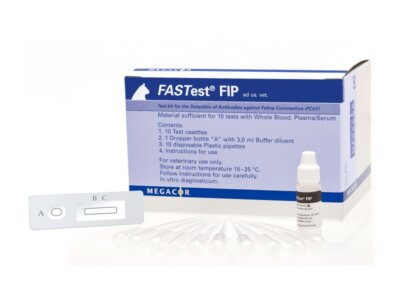
. A titer test can be run but this can only check for coronavirus exposure. This is not helpful if positive as most cases of coronavirus infection are normal intestinal infections and there is no way to differentiate this from FIP infection. Other tests which help support a diagnosis of FIP include blood tests x-rays ultrasound fluid analysis and in some cases biopsy of various organs.
The blood proteins are the slowest blood markers to resolve to. However these tests can only. The albumin to globulin ratio however has a significantly higher diagnostic value to distinguish FIP.
A positive result means only that the cat has had a prior exposure to coronavirus but not necessarily to FIPV. Classic indirect tests for FIP include CBC total serum protein albumin and globulin levels AG ratio and basic blood chemistries Addie et al 2009 Pedersen 2009 Drechsler et al 2011. In view of the low rate of false-positive results high specificity the mRNA RT-PCR may be a valuable addition to the diagnostic arsenal for FIP.
FIP is also most common in breeding colonies and high population households possibly in part due to the stress of over-crowding dampening the immune response. Ninety five percent of cats in the world have been exposed to FCoV. Referred to as a titer this level can be used.
Tissues which are not involved in the disease process contain only small amounts or no viral RNA at all. Prevalence of FIP in cats with effusion and a conclusive Rivalta test result was 346. 3 Have the cats blood tested.
Total protein in cats with FIP can reach very high concentrations of 12 gdL. What is sometimes referred to incorrectly as an FIP test measures the cats exposure to FCoV. FIP cannot be reliably detected with any test.
These values increased when cats with lymphoma or bacterial infections were excluded or when only cats 2 years were considered. As fip is difficult to diagnose your vet may recommend a biopsy be taken to distinguish fip from a treatable disease. A working diagnosis of FIP is typically made on the basis of the cats clinical history as well as supportive laboratory data.
Only in a few cats does the coronavirus mutate and lead to FIP. This FIP test is based on the detection of antibodies against the coronavirus in the blood. A negative result however is likely to mean that FIP can be ruled out.
FIP can occur in any cat of any age however it is most common in young cats with 80 of cases occurring in cats less than two years of age. Unfortunately there is no specific FIP blood test. THERE IS NO SUCH THING AS AN FIP TEST.
Exposure to coronavirus is actually very common. Many so-called feline infectious peritonitis FIP tests are actually tests for antibody to the virus which causes FIP feline coronavirus FCoV. This checks to see if any coronavirus antibodies are presented.
This is a feline coronavirus that is very common and only causes mild symptoms. FIP feline infectious peritonitis in cats is caused by feline coronavirus FCOV. A feline infectious peritonitis test is indicated in any cat showing vague signs of illness or with fluid development.
Sometimes FIP can only be diagnosed through ruling out other diseases. FIP can look like many other unrelated diseases in cats. Test Cat for FIP.
Blood test results usually show the AG normal range to be 5 to 10 but anything less than 6 in the context of other symptoms is starting to be consistent with FIP. How is FIP diagnosed. These titer tests are NOT.
If FIP is suspected your veterinarian may take an X-ray or ultrasound of your cat. The exact trigger for the mutation is still unknown. A proper diagnosis requires a multitude of diagnostics both to confirm FIP as well as to rule out out conditions that share similar symptoms.
It is estimated that 80 of cats carry FCOV in their system. How Do You Test For Fip In Cats. Common abnormalities usually include a chronic non-regenerative anemia anemia of chronic disease leukocytosis with an absolute increase in neutrophils and an absolute.
The first thing the vet will probably do is test the cats blood. What Does the Test Reveal in Cats. Due to the inflammatory nature seen with FIP protein levels in blood are often increased.
As FIP is difficult to diagnose your vet may recommend a biopsy be taken to distinguish FIP from a treatable disease. While antibody levels or titers to coronavirus can be measured they cannot definitively distinguish between exposure to FeCV and FIPV. The most common laboratory abnormality in cats with FIP is an increase in total serum protein concentration caused by increased globulins mainly γ-globulins which occurs in 70 of cats with FIP.
There are no real contraindications to performing this test in a sick cat. FIP猫伝染性腹膜炎の治療プログラム84日間分の費用不足分再募集アクティビティ CAMPFIRE キャンプ. Because the FIP coronavirus can invade many different tissues routine blood testing may indicate evidence of kidney or liver damage.
FIP is a relatively rare but often fatal viral disease which is common in young cats less than 2 years old and kittens and is caused by an infection with the virus named feline coronavirus. Among the organs with highest viral loads are the omentum mesenteric lymph nodes and spleen so these tissues are most useful for analysis by RT-PCR. If the cat has formed antibodies it only means that it has come into.
Generally the FCOV not harmful. Feline infectious peritonitis is caused by a virus belonging to the coronavirus group. An AG of 2 or 3 is a very strong FIP signal.
However these antibodies just mean that the cat has been exposed to the virus not that they have FIP. In spite of this limitation however young cats that experience a fever. An AG of 4 is a moderate FIP signal.
In cats with FIP large quantities of FCoV RNA can only be found in tissues with inflammatory changes. The Rivalta test had a sensitivity of 913 specificity of 655 PPV of 584 and NPV of 934 for the diagnosis of FIP. Neils Pedersen once famously said that more cats had died of the tests than of the disease because a diagnosis of.
However many healthy cats and sick cats with non-FIP illnesses are also positive to these tests and can be mis-diagnosed. Its important to note that this is different from the coronavirus that infects people and leads to COVID-19. Unfortunately there is currently no definitive test to diagnose FIP.
The feline coronavirus only causes illness in cats and the seriousness of that illness can vary. Drugs such as interferon and polyprenyl immunostimulant have been trialled with mixed results. Of a group of 81 animals in which FIP had been confirmed by post-mortem examination 75 93 tested positive whereas 17 cats with different pathologies non-FIP cases all tested negative.
There are a few other tests that may help support a FIP diagnosis. The Coronavirus in Cats. FCOV is found in both indoor and outdoor cats.
Look for AG to get above at least 7 and preferably 8 as you treat. Consider referral to a Veterinary. The immunoperoxidase test can detect white.
However when FCOV mutates into feline infectious peritonitis virus FIPV it becomes deadly.
Fastest Fip Feline Infectious Peritonitis Vetlab Supplies Ltd
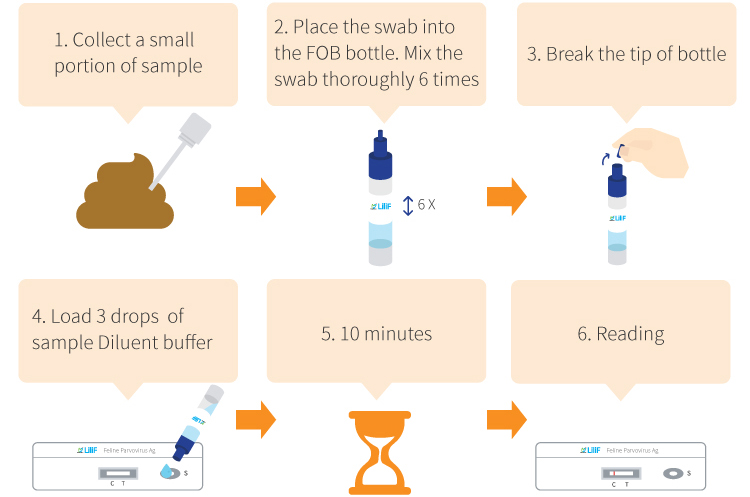
Feline Coronavirus Ag Rapid Test Kit Intron Biotechnology

5 Tips To Help Veterinarians Rule Out And Prevent Fip Biogal Labs


Comments
Post a Comment